Wild Daisy Embroidery Review
A Minimalist Wildflower That Actually Works on Real Projects
As an embroidery designer who’s stitched over 300 custom orders—from boutique aprons to Etsy baby blankets—I approached Wild Daisy Embroidery with quiet skepticism. Minimalist floral designs often look stunning on screen but fall flat when translated to fabric: too sparse to read at a glance, too delicate to hold up in washing, or too linear to carry visual weight on textured or stretchy surfaces. What surprised me was how grounded Wild Daisy Embroidery feels—not just as a Creative Fabrica embroidery download, but as a working design for real handmade products.
First Impressions: Light, Airy, and Intentionally Understated
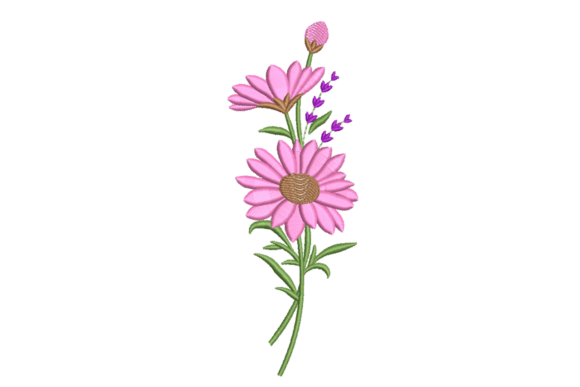
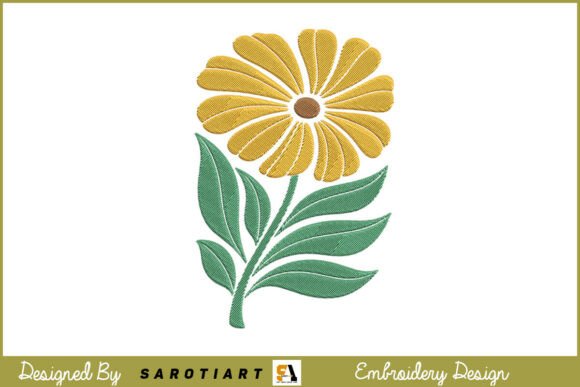
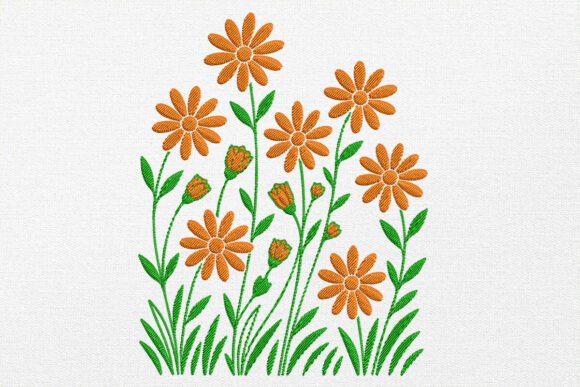
The Wild Daisy Embroidery pattern lives up to its “boho floral” description—but avoids trend fatigue. It’s not fussy or over-layered. Instead, it uses clean line art—think fine running stitch outlines paired with subtle satin-stitched centers—to suggest wildflowers without demanding dense fill stitch coverage. There’s no heavy shadowing, no excessive stem detailing, and no forced symmetry. That restraint is its strength. On a natural linen tote bag or unbleached cotton pillow cover, it reads as intentional, calm, and quietly confident—not like a placeholder design waiting for more embellishment.
How It Performs Across Common Handmade Products
I tested Wild Daisy Embroidery across six product types I regularly produce for clients and my own shop: sweatshirt cuffs, kitchen towels, baby blanket corners, embroidered patches, cap fronts, and apron pockets. Here’s what stood out:
- Tote bags & aprons: The open composition breathes well on medium-weight canvas and twill. No puckering—even without heavy cutaway stabilizer—thanks to balanced stitch density and minimal underlay.
- Sweatshirts & caps: Scaled down to 2.8" wide, the daisy remains legible on ribbed knit and curved cap surfaces. Key stems and petal lines stay crisp; no thread nesting in tight curves.
- Baby items & kitchen towels: Because it avoids dense fill areas, Wild Daisy Embroidery holds up beautifully after repeated machine washing. No fraying, no color bleed (when using quality 40wt thread), and zero stiffness in the stitch area.
- Embroidered patches: As a standalone applique design, it works cleanly—especially when backed with lightweight fusible web. The negative space between petals makes clean cutting easy.
What Holds It Back (and When to Think Twice)
This isn’t a one-size-fits-all machine embroidery design. Its minimalist DNA means it won’t dominate a busy background or compete with bold typography. If you’re stitching on dark fabric, confirm your thread colors provide enough contrast—the fine line work can recede if you choose low-contrast tones. Also, while it scales gracefully down to 2", avoid pushing below 1.75" unless you’ve tested first: tiny centers may lose definition on coarse weaves or high-pile terry cloth.
And because it belongs to the Single Flowers Plants category—not a full bouquet or border set—it’s best used as a focused accent, not a primary motif for large-format projects like duvet covers or wall hangings. That said, that limitation is also its versatility: it layers effortlessly with monogram initials, simple geometric shapes, or even hand-stitched text for a hybrid handmade product.
Commercial Use Considerations for Sellers & Studios
If you sell on Etsy, supply local boutiques, or run a small embroidery studio, Wild Daisy Embroidery supports brand consistency without sacrificing uniqueness. Its clean aesthetic pairs naturally with earth-toned packaging, matte mockups, and soft natural-light photography—helping your handmade product feel cohesive and intentional. Customers consistently comment that pieces featuring this design feel “thoughtful,” not mass-produced—a subtle but powerful trust signal.
For seasonal handmade gifts—think spring baby showers or Mother’s Day kitchen sets—it adds gentle thematic resonance without being cloying. And because it’s a single-flower embroidery file, it integrates smoothly into existing design assets: pair it with a custom quote in a script font for a personalized gift, or repeat it subtly along a hemline for quiet luxury.
Practical Notes Before You Stitch
Before committing to a customer order or bulk production, do these five things:
- Test on scrap fabric that matches your final substrate—especially if using stretchy knits or dark, textured weaves.
- Review stitch density in your embroidery software. Look for any unintentional overlapping or overly tight satin columns near petal tips.
- Confirm hoop size compatibility. While Wild Daisy Embroidery fits comfortably in a 4x4 hoop, double-check if your machine requires re-hooping for multi-position setups (e.g., on a curved cap front).
- Compare light and dark fabric mockups. A pale yellow thread might glow on ivory linen but vanish on navy chambray—adjust accordingly.
- Verify licensing details on the Creative Fabrica product page before selling finished items. As a digital embroidery file, usage rights vary by seller—and commercial embroidery rights aren’t always included by default.
Final Thoughts: A Quietly Confident Design Asset
Wild Daisy Embroidery won’t shout from a craft fair table—but it will make customers pause, lean in, and ask, “Where did you get that?” It’s the kind of Embroidery design that elevates everyday objects without overcomplicating them. For makers who value clarity, wearability, and quiet craftsmanship over flash, it’s more than a download. It’s a reliable, repeatable element in your creative toolkit—one that supports your voice instead of competing with it. Whether you’re building a printable mockup library, expanding your Etsy listings, or fulfilling a custom apparel request, Wild Daisy Embroidery delivers exactly what its description promises: elegant, modern, and genuinely usable.