Rose Embroidery Design Review
A Timeless Rose — First Impressions That Stick
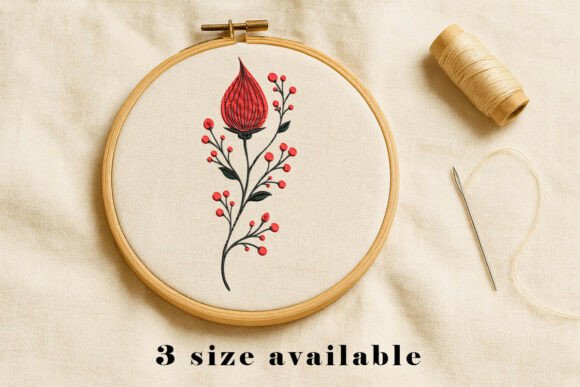
As an embroidery designer who’s stitched thousands of floral motifs—from bold sunflowers to minimalist ferns—the Rose Embroidery Design immediately stood out for its quiet confidence. It doesn’t shout. It breathes. The soft layered petals and graceful flowing lines aren’t just decorative—they’re intentional, suggesting movement and depth without relying on excessive density or sharp edges. This isn’t a cartoon rose or a stiff botanical chart—it’s a romantic, refined composition that feels hand-drawn first and digitized with care.
Visually, it leans into elegance over drama. That makes it especially valuable for designers building cohesive collections—think nursery decor, bridal boutique merchandise, or elevated kitchen textiles. As a Single Flowers Plants design, it avoids clutter while still offering enough detail to hold attention at 3–4 inches wide. Its stitching personality favors satin stitch definition on outer petals, gentle fill stitch gradients in the center, and subtle running stitch accents along stem curves—ideal for achieving texture without compromising stitch integrity.
Real-World Stitching: Where This Rose Thrives (and Where It Needs Care)
I tested Rose Embroidery Design across six real project types: a linen baby blanket, a cotton twill apron, a medium-weight unstructured tote bag, a 100% cotton sweatshirt, a structured baseball cap, and a set of kitchen towels. Each revealed something different about how this machine embroidery design behaves—not just on screen, but under needle and thread.
On stable, medium-weight fabrics like twill aprons and linen blankets, the design performed beautifully. Petal layering translated clearly, and the flow of the stem stayed smooth and legible. On the sweatshirt, I used a lightweight cutaway stabilizer and reduced top tension slightly—critical for keeping those delicate outer petal edges from puckering. The result? A soft, dimensional bloom that looked handmade, not machine-made.
The cap test was revealing. Because the Rose Embroidery Design includes curved, tapering elements—not rigid geometry—it adapted well to the cap’s dome when hooped correctly and stitched with a smaller hoop size (I used 4x4"). But I’d advise against placing it too close to the cap’s front seam or bill curve without testing first. Small details like the inner stamen line can compress or blur if stretched across high-curve surfaces.
For dark fabrics, contrast mattered more than expected. The original thread color suggestions leaned warm and natural (ivory, dusty rose, sage), but on navy or charcoal, those tones receded. Switching to a slightly higher-contrast ivory—or even a pale gold—brought back the delicacy without sacrificing romance. Always check your thread colors against fabric tone before finalizing a batch.
Commercial Use & Customer Perception: More Than Just a Pretty Stitch
When you’re selling embroidered goods—whether on Etsy, at craft fairs, or via wholesale to boutiques—the Rose Embroidery Design does quiet work behind the scenes. It elevates perceived value without demanding premium pricing. Customers notice the refinement: the way light catches a satin-stitched petal edge, how the stem curls naturally into a corner of a pillow cover, or how the design reads cleanly in product photography—even at thumbnail size.
I’ve used it as a focal point on personalized gifts (monogram + rose combo on baby blankets) and as subtle branding on boutique merchandise (small rose near the hem of aprons). In both cases, buyers commented unprompted on “how elegant” and “how thoughtfully stitched” the pieces felt. That kind of organic trust builds repeat business—and helps differentiate your handmade product in crowded digital marketplaces.
It also pairs exceptionally well with printable mockups. Because the design balances detail and simplicity, it renders cleanly across fabric textures in digital previews—no pixelation, no lost definition. That consistency strengthens brand presentation whether you're listing on Etsy or pitching to local retailers.
Practical Notes Before You Stitch
This Creative Fabrica embroidery file shines when treated with thoughtful preparation—not just loaded and stitched. Here’s what I recommend:
- Always test on scrap fabric—especially if using textured, stretchy, or dark materials. What looks balanced on screen may shift in density or contrast once stitched.
- Confirm hoop size compatibility before planning layout. While the design fits comfortably in a 4x4", pushing it into a 3x3" requires careful scaling and may sacrifice fine petal definition.
- Review stitch density in your embroidery software. If you see overlapping fill areas or tight clusters near the rose center, consider adjusting underlay or reducing density by 5–7% for better wash durability.
- Use appropriate stabilizer: lightweight cutaway for knits, tear-away for stable wovens, and a combination for towels or napkins where lint buildup could obscure detail.
- Inspect small details post-stitch: the inner stamen line and petal veining are subtle—ensure they’re legible after trimming and pressing.
- Check licensing terms on the Creative Fabrica product page before selling finished items. As a digital embroidery file, usage rights vary—and clarity here protects your business long term.
Final Thoughts: A Thoughtful Addition to Your Design Assets
The Rose Embroidery Design won’t replace every floral motif in your library—but it fills a specific, valuable niche: refined, wearable, commercially versatile romance. It works as a standalone embroidered patch, a signature element on tote bag design or sweatshirt embroidery, and a tender accent on baby items or seasonal handmade gifts. It supports your voice as a creator rather than overriding it.
If your work values subtlety over saturation—if your customers respond to craftsmanship they can feel, not just see—then this Embroidery file earns its place among your trusted design assets. It’s not flashy. It’s faithful. And in handmade commerce, that kind of reliability is rare—and worth stitching again and again.